C++ is a powerful and versatile programming language widely used for developing software applications, including operating systems, games, web browsers, and embedded systems. Developed by Bjarne Stroustrup in the early 1980s, C++ builds upon the syntax and features of the C programming language while adding support for object-oriented programming (OOP) concepts such as classes, inheritance, polymorphism, and encapsulation.
One of C++’s main strengths is its performance and efficiency, making it suitable for projects that require high performance and low-level system access. Additionally, C++ offers a rich set of standard libraries, including the Standard Template Library (STL), which provides containers, algorithms, and other utility classes to streamline development.
C++ is known for its flexibility and portability, allowing developers to write code that can run on various platforms with minimal modifications. Its support for both procedural and object-oriented programming paradigms makes it adaptable to a wide range of application domains.
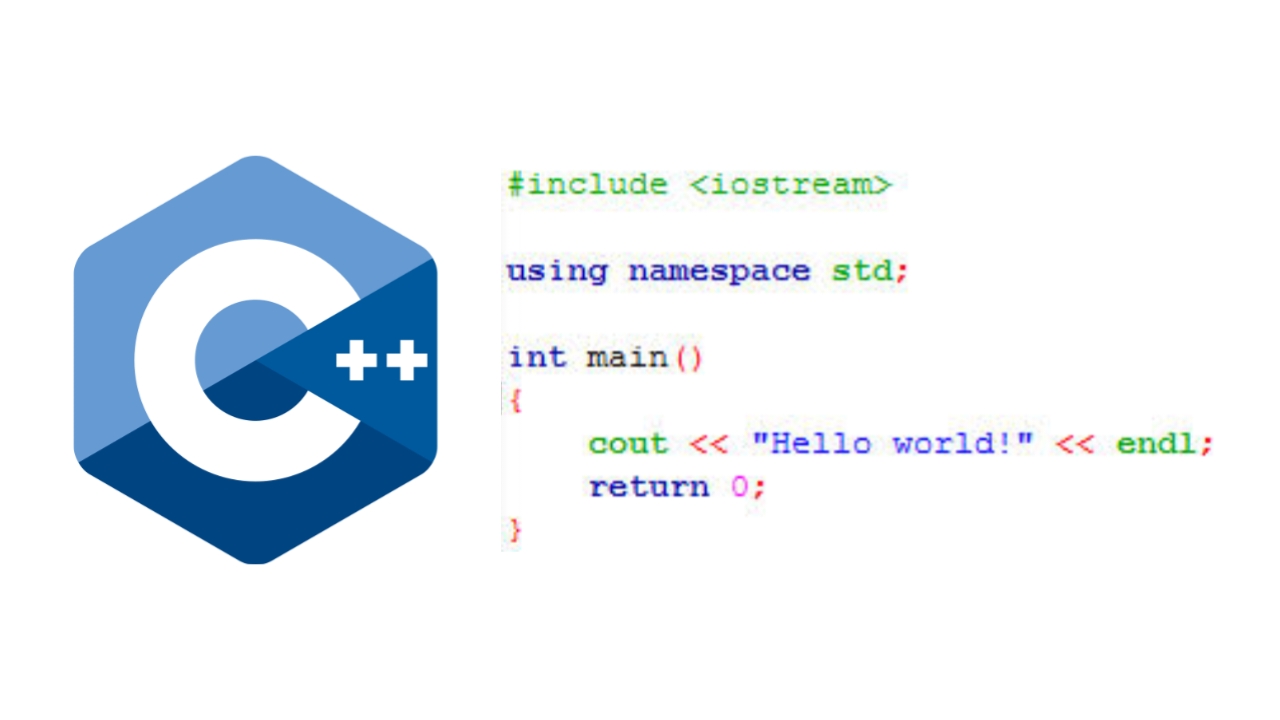
For example, here’s a simple C++ program to print “Hello, World!”:
#include <iostream>
int main() {
std::cout << “Hello, World!” << std::endl;
return 0;
}
In this example, `#include <iostream>` imports the input/output stream library, and `std::cout << “Hello, World!” << std::endl;` prints the message to the console. `int main()` is the entry point of the program, and `return 0;` indicates successful program execution.
C++ continues to evolve with new features and enhancements, ensuring its relevance in modern software development.
C++ – Explained In 200 Words
 Byronic