Nmap, short for Network Mapper, is a free and open-source network scanning tool used for discovering hosts and services on a computer network and evaluating their security posture. Developed by Gordon Lyon in 1997, Nmap has become one of the most widely used network exploration and security auditing tools.
Nmap utilizes raw IP packets to determine which hosts are available on the network, what services those hosts are offering, what operating systems they are running, and other characteristics. It supports a variety of scanning techniques, including port scanning, version detection, OS detection, and scriptable interaction with target systems.
One of Nmap’s key features is its flexibility and extensibility, with support for scripting and customization through the Nmap Scripting Engine (NSE). This allows users to create and share custom scripts to automate tasks, perform advanced scanning, or gather additional information from target systems.
Nmap is commonly used by network administrators, security professionals, and penetration testers to identify vulnerabilities, audit network security configurations, and assess the overall security posture of networks and systems.
For example, to perform a basic port scan on a target host, the following command can be used:
nmap <target_host>
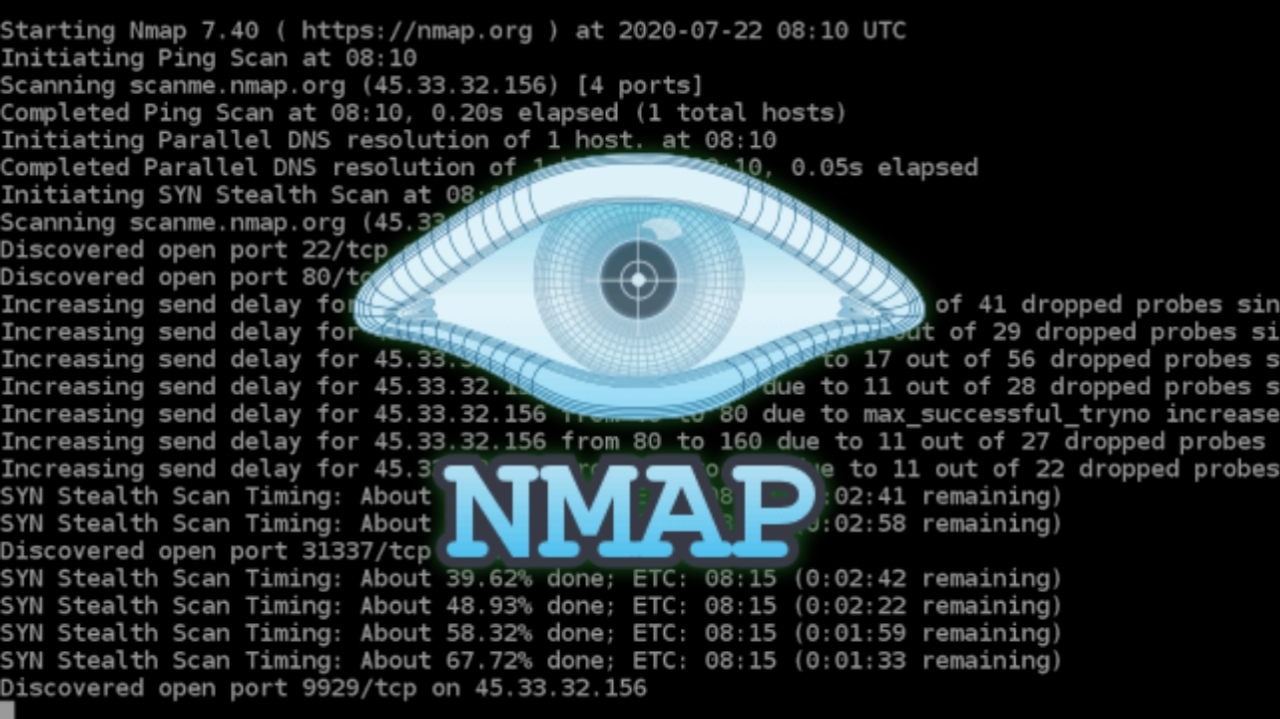
This command will scan the target host for open ports and report back the results. Nmap’s versatility, ease of use, and powerful features make it an indispensable tool for network reconnaissance and security assessment.
Nmap – Explained In 200 Words
 Byronic