
Git is a distributed version control system used for tracking changes in source code during software development. Created by Linus Torvalds in 2005, Git was designed to handle the demands of the Linux kernel development process. It quickly gained popularity due to its speed, efficiency, and powerful branching and merging capabilities. Git allows developers toContinue reading “Git – Explained In 200 Words”
Tag Archives: byronic
Javascript – Explained In 200 Words
JavaScript is a versatile programming language primarily used for web development. Developed by Brendan Eich in 1995, JavaScript was initially created in just 10 days to provide interactivity on web pages in Netscape Navigator. Since then, it has evolved significantly and become one of the most widely used programming languages worldwide. JavaScript is known forContinue reading “Javascript – Explained In 200 Words”
Big O Notation – Explained In 200 Words
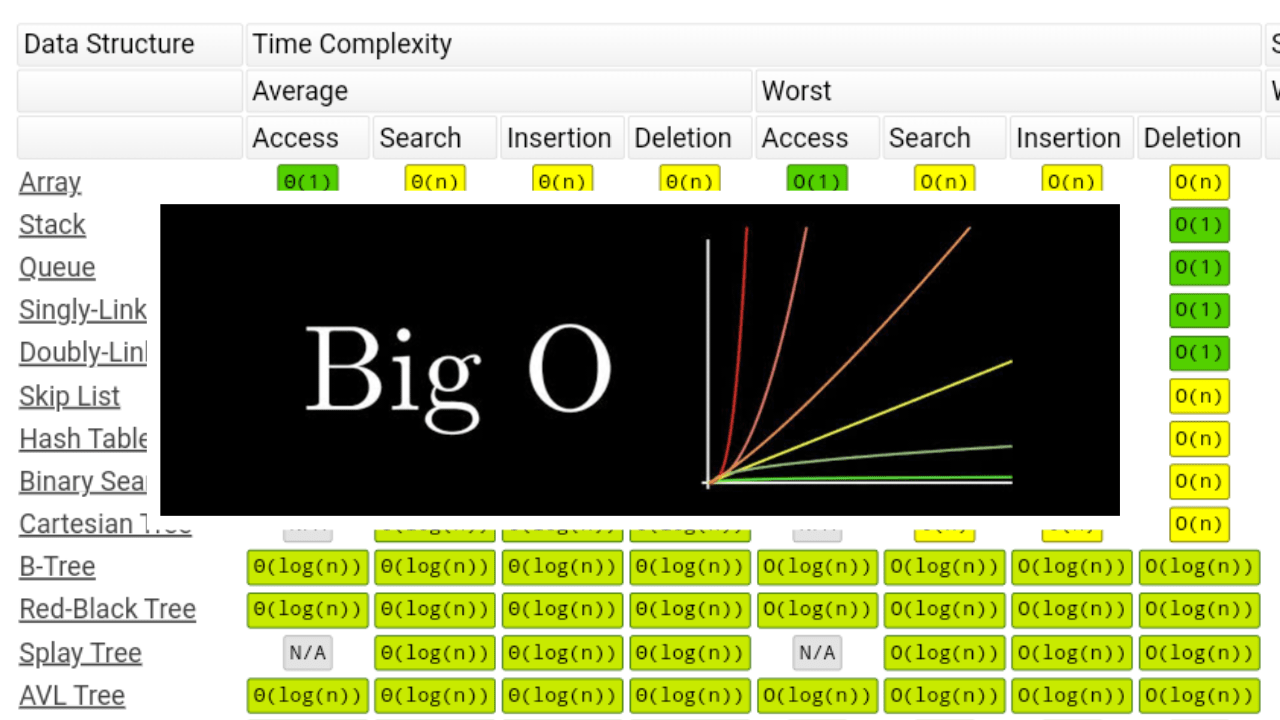
Big O notation is a mathematical concept used in computer science to analyze algorithm efficiency. It originated in mathematics but gained prominence in computer science in the 1970s, with Donald Knuth’s work. It simplifies the comparison of algorithms by quantifying their worst-case performance as input size increases. For instance, consider linear search (O(n)) versus binaryContinue reading “Big O Notation – Explained In 200 Words”
Bootstrap – Explained In 200 Words

Bootstrap is a popular front-end framework for building responsive and mobile-first websites and web applications. Developed by Twitter in 2011, Bootstrap provides a collection of HTML, CSS, and JavaScript components and utilities that simplify the process of designing and styling user interfaces. One of Bootstrap’s key features is its grid system, which allows developers toContinue reading “Bootstrap – Explained In 200 Words”
C# – Explained In 200 Words
C# is a versatile and modern programming language developed by Microsoft in the early 2000s as part of its .NET framework. Designed by Anders Hejlsberg, C# combines the power and efficiency of C++ with the simplicity and ease of use of languages like Java. It is widely used for developing a variety of applications, includingContinue reading “C# – Explained In 200 Words”
Fuchsia – Explained In 200 Words

Fuchsia OS is an open-source, capability-based operating system developed by Google. First revealed in 2016, Fuchsia aims to be a versatile, scalable, and secure platform capable of running on a wide range of devices, from smartphones and tablets to laptops, IoT devices, and embedded systems. Unlike Google’s other operating systems like Android and Chrome OS,Continue reading “Fuchsia – Explained In 200 Words”
Linux – Explained In 200 Words

Linux is a Unix-like, open-source operating system kernel first released by Linus Torvalds in 1991. It forms the core of various Linux distributions, such as Ubuntu, Debian, Fedora, and CentOS, which package the Linux kernel with additional software and utilities to create complete operating systems. Linux is known for its stability, security, and flexibility, makingContinue reading “Linux – Explained In 200 Words”
NodeJS – Explained In 200 Words

Node.js is a powerful, server-side JavaScript runtime environment that allows developers to build scalable and efficient network applications. Developed by Ryan Dahl in 2009, Node.js is built on Chrome’s V8 JavaScript engine and operates on a non-blocking, event-driven architecture, making it lightweight and efficient for handling concurrent connections and I/O operations. Node.js enables developers toContinue reading “NodeJS – Explained In 200 Words”
Dart – Explained In 200 Words
Dart is a versatile programming language primarily used for building web, mobile, and desktop applications. Developed by Google, Dart was first unveiled in 2011 with the goal of providing a fast, productive, and scalable language for modern app development. One of Dart’s key features is its optional static typing system, which allows developers to catchContinue reading “Dart – Explained In 200 Words”
OpenCV – Explained In 200 Words

OpenCV, short for Open Source Computer Vision Library, is an open-source library primarily focused on computer vision and machine learning. Originally developed by Intel in 1999, OpenCV has since become one of the most widely used libraries for real-time image processing, object detection, and image recognition tasks. OpenCV provides a vast array of functions andContinue reading “OpenCV – Explained In 200 Words”
 Byronic