React Native is an open-source mobile application framework developed by Facebook, designed for building native mobile applications using JavaScript and React. Introduced in 2015, React Native allows developers to create cross-platform mobile apps that run on both iOS and Android platforms while sharing a single codebase. Key features of React Native include: 1. Single Codebase:Continue reading “React Native – Explained In 200 Words”
Tag Archives: javascript
Next.js – Explained In 200 Words
Next.js is a popular open-source React framework for building server-side rendered (SSR) or statically generated web applications. Developed by Vercel, it simplifies the development of React applications by providing a pre-configured setup with features like server-side rendering, client-side routing, and automatic code splitting. Key features of Next.js include: 1. Server-Side Rendering (SSR): Next.js enables developersContinue reading “Next.js – Explained In 200 Words”
jQuery – Explained In 200 Words

jQuery is a fast, small, and feature-rich JavaScript library that simplifies HTML document traversal and manipulation, event handling, and animation. Created by John Resig in 2006, jQuery revolutionized web development by providing a concise and powerful way to interact with HTML elements and manipulate the DOM (Document Object Model) effectively. jQuery’s key features include: 1.Continue reading “jQuery – Explained In 200 Words”
Vue.js – Explained In 200 Words

Vue.js is a progressive JavaScript framework used for building user interfaces and single-page applications. Created by Evan You in 2014, Vue.js has gained popularity for its simplicity, flexibility, and ease of integration with existing projects. Vue.js is known for its reactive data binding, allowing developers to declaratively bind data to the DOM (Document Object Model)Continue reading “Vue.js – Explained In 200 Words”
Javascript – Explained In 200 Words
JavaScript is a versatile programming language primarily used for web development. Developed by Brendan Eich in 1995, JavaScript was initially created in just 10 days to provide interactivity on web pages in Netscape Navigator. Since then, it has evolved significantly and become one of the most widely used programming languages worldwide. JavaScript is known forContinue reading “Javascript – Explained In 200 Words”
Big O Notation – Explained In 200 Words
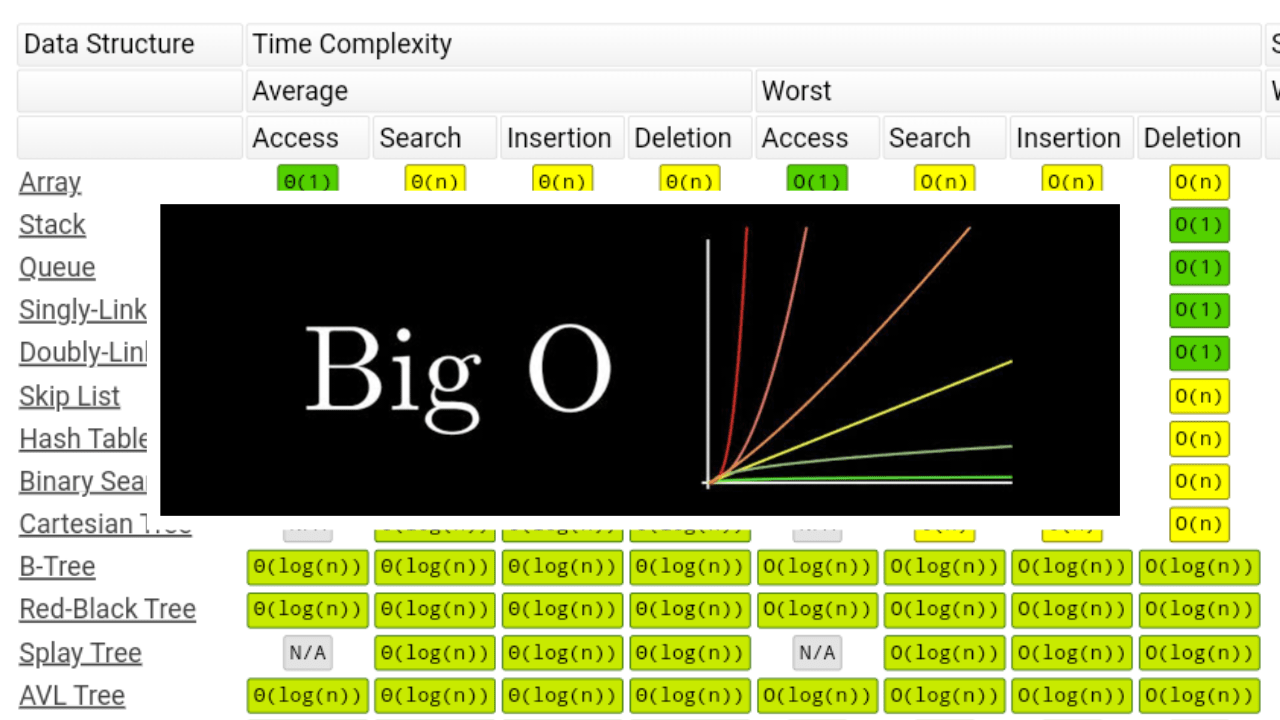
Big O notation is a mathematical concept used in computer science to analyze algorithm efficiency. It originated in mathematics but gained prominence in computer science in the 1970s, with Donald Knuth’s work. It simplifies the comparison of algorithms by quantifying their worst-case performance as input size increases. For instance, consider linear search (O(n)) versus binaryContinue reading “Big O Notation – Explained In 200 Words”
Bootstrap – Explained In 200 Words

Bootstrap is a popular front-end framework for building responsive and mobile-first websites and web applications. Developed by Twitter in 2011, Bootstrap provides a collection of HTML, CSS, and JavaScript components and utilities that simplify the process of designing and styling user interfaces. One of Bootstrap’s key features is its grid system, which allows developers toContinue reading “Bootstrap – Explained In 200 Words”
NodeJS – Explained In 200 Words
Node.js is a powerful, server-side JavaScript runtime environment that allows developers to build scalable and efficient network applications. Developed by Ryan Dahl in 2009, Node.js is built on Chrome’s V8 JavaScript engine and operates on a non-blocking, event-driven architecture, making it lightweight and efficient for handling concurrent connections and I/O operations. Node.js enables developers toContinue reading “NodeJS – Explained In 200 Words”
 Byronic