
Docker is a platform for developing, shipping, and running applications using containerization technology. Created by Docker, Inc. in 2013, Docker simplifies the process of building, deploying, and managing applications by packaging them along with their dependencies into lightweight, portable containers. Containerization allows developers to encapsulate applications and their dependencies into self-contained units called containers, whichContinue reading “Docker – Explained In 200 Words”
Tag Archives: technology
Ethical Hacking – Explained In 200 Words

Ethical hacking, rooted in the 1960s, evolved alongside the growth of computer networks and cyber threats. Early practitioners, dubbed “white-hat hackers,” pioneered techniques to secure systems. In the 1970s and 1980s, ethical hacking gained prominence as organizations sought ways to safeguard their digital assets. The Computer Fraud and Abuse Act of 1986 in the UnitedContinue reading “Ethical Hacking – Explained In 200 Words”
RUST – Explained In 200 Words

Rust is a systems programming language developed by Mozilla Research, designed for safety, concurrency, and performance. Originally announced in 2010 and released to the public in 2015, Rust was created by Graydon Hoare and designed to address common pitfalls of C and C++, such as memory safety issues and undefined behavior. Rust’s key features include:Continue reading “RUST – Explained In 200 Words”
SASS – Explained In 200 Words
Sass, an evolution of CSS, emerged in 2006 as a preprocessor scripting language to address CSS limitations. Initially conceptualized by Hampton Catlin and later refined by Natalie Weizenbaum, Sass introduced advanced features like variables, nesting, mixins, and inheritance. For instance, Sass variables enable defining reusable values, such as colors or font sizes, enhancing maintainability: $primary-color:Continue reading “SASS – Explained In 200 Words”
Next.js – Explained In 200 Words
Next.js is a popular open-source React framework for building server-side rendered (SSR) or statically generated web applications. Developed by Vercel, it simplifies the development of React applications by providing a pre-configured setup with features like server-side rendering, client-side routing, and automatic code splitting. Key features of Next.js include: 1. Server-Side Rendering (SSR): Next.js enables developersContinue reading “Next.js – Explained In 200 Words”
Vue.js – Explained In 200 Words

Vue.js is a progressive JavaScript framework used for building user interfaces and single-page applications. Created by Evan You in 2014, Vue.js has gained popularity for its simplicity, flexibility, and ease of integration with existing projects. Vue.js is known for its reactive data binding, allowing developers to declaratively bind data to the DOM (Document Object Model)Continue reading “Vue.js – Explained In 200 Words”
Machine Learning – Explained In 200 Words

Machine Learning (ML) is a branch of artificial intelligence (AI) that focuses on developing algorithms and techniques that allow computers to learn from data and make predictions or decisions without being explicitly programmed for each task. The goal of machine learning is to enable computers to automatically improve their performance on a specific task overContinue reading “Machine Learning – Explained In 200 Words”
Git – Explained In 200 Words

Git is a distributed version control system used for tracking changes in source code during software development. Created by Linus Torvalds in 2005, Git was designed to handle the demands of the Linux kernel development process. It quickly gained popularity due to its speed, efficiency, and powerful branching and merging capabilities. Git allows developers toContinue reading “Git – Explained In 200 Words”
Javascript – Explained In 200 Words
JavaScript is a versatile programming language primarily used for web development. Developed by Brendan Eich in 1995, JavaScript was initially created in just 10 days to provide interactivity on web pages in Netscape Navigator. Since then, it has evolved significantly and become one of the most widely used programming languages worldwide. JavaScript is known forContinue reading “Javascript – Explained In 200 Words”
Big O Notation – Explained In 200 Words
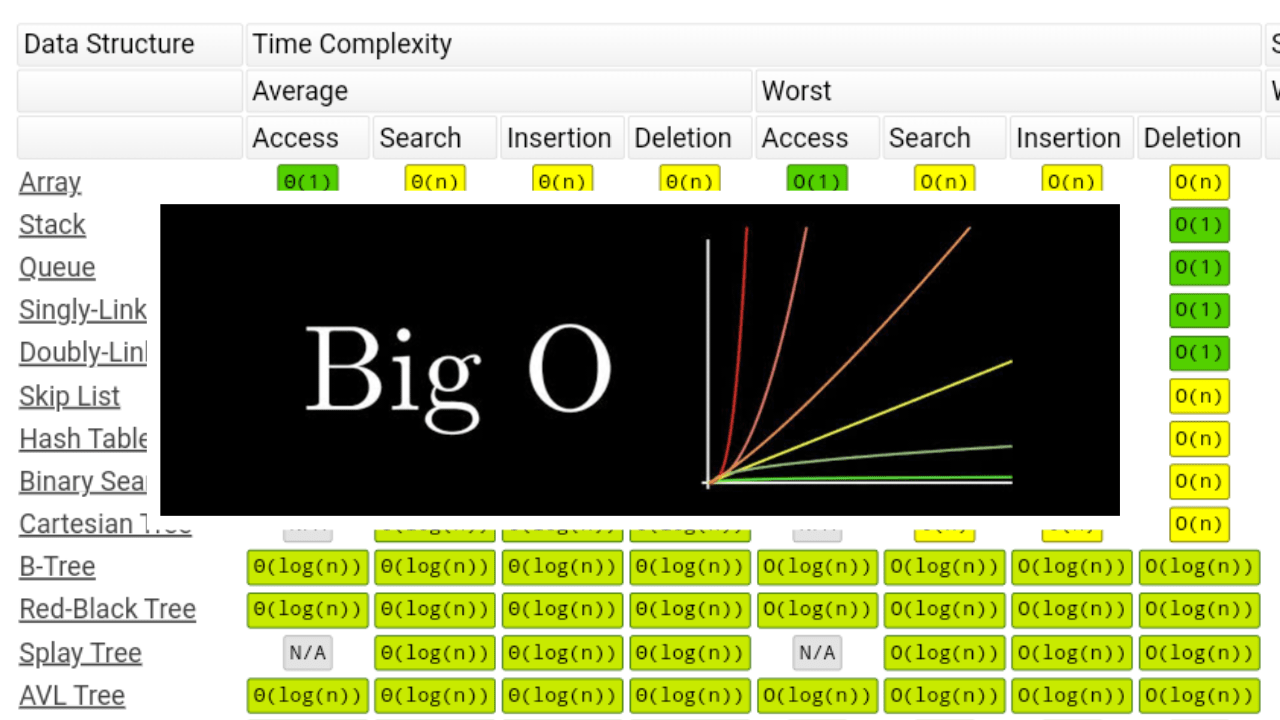
Big O notation is a mathematical concept used in computer science to analyze algorithm efficiency. It originated in mathematics but gained prominence in computer science in the 1970s, with Donald Knuth’s work. It simplifies the comparison of algorithms by quantifying their worst-case performance as input size increases. For instance, consider linear search (O(n)) versus binaryContinue reading “Big O Notation – Explained In 200 Words”
 Byronic